Why are my plant leaves turning yellow? (Causes and fixes)
You notice it suddenly. A healthy green plant starts losing color, and the leaves turn pale, then yellow. If you are searching for answers about plant leaves turning yellow, you are likely dealing with a care issue that needs quick attention.
Yellowing leaves are one of the earliest signs that something is off, but the cause is not always obvious. The same symptom can come from overwatering, poor light, or nutrient imbalance. The goal is not to guess. The goal is to diagnose correctly and fix it before the plant declines further.
Quick answer:
Plant leaves turn yellow mainly due to watering issues, light imbalance, or nutrient deficiency, and fixing the root cause quickly can restore plant health.
What does it mean when plant leaves turn yellow
Plant leaves turning yellow is a visible response to stress. When a plant cannot maintain healthy chlorophyll levels, the green pigment fades and reveals yellow tones underneath.
Here is the precise definition you should keep in mind.
Yellowing leaves, also called chlorosis, occur when a plant loses its ability to produce or maintain chlorophyll due to environmental or biological stress.
This is not random. It is a reaction.
The key insight is simple: yellow leaves do not tell you the problem, they tell you something is wrong.
According to horticulture research, improper watering accounts for over 60 percent of common houseplant issues. University of Florida Extension, 2021. That alone shows why diagnosis matters more than reaction.
Why are my plant leaves turning yellow from overwatering
Overwatering is the most common reason behind plant leaves turning yellow, especially for indoor plants.
When soil stays wet for too long, roots cannot access oxygen. This leads to stress, then damage, and eventually root rot. The plant reacts by shutting down leaf function, which shows up as yellowing.
You will often notice a pattern:
Leaves look soft and pale
Soil feels constantly damp
Growth slows down even though watering is frequent
Overwatering damages roots before you see visible symptoms above soil.
This is why simply watering less is not always enough. You also need to check drainage and soil condition. If water sits in the pot, the problem will return.
If you are unsure about your plant type, identifying it correctly first can help. You can use a reliable method to identify a plant from a photo and understand its actual watering needs.
Why are plant leaves turning yellow from underwatering
Underwatering creates a different kind of stress. The plant lacks moisture, so it cannot maintain healthy leaf function.
Unlike overwatering, underwatering leads to dryness first, then yellowing.
Here is how you can recognize it:
Leaves feel dry or slightly crispy
Edges turn brown before full yellowing
Soil feels light and pulls away from the pot
The confusion comes from the similar color change. Both issues produce yellow leaves, but the texture and soil condition tell the real story.
Dry soil combined with brittle leaves almost always points to underwatering.
Fixing this requires consistency, not just adding more water once. You need a stable watering schedule based on the plant type.
Plant leaves turning yellow due to light conditions
Light is one of the most underestimated factors in plant health. Plants depend on light for photosynthesis, and any imbalance affects leaf color quickly.
Too much light can bleach leaves, causing pale yellow patches. Too little light weakens the plant and reduces chlorophyll production.
A common scenario is moving a plant without adjusting gradually.
For example, placing a shade-loving plant in direct sunlight often leads to yellowing within days. On the other hand, keeping a light-loving plant in a dark corner causes slow yellowing over time.
Plants react to light changes faster than most people expect.
If you are unsure about what plant you are dealing with, exploring ways to identify unknown plants can help you narrow it down before diagnosing deeper issues.
Nutrient deficiency and yellow leaves
Not all yellow leaves come from watering or light. Sometimes the plant lacks essential nutrients.
Nitrogen deficiency is the most common cause. It affects older leaves first, turning them yellow while new growth remains green.
This pattern is important because it differs from watering issues, which affect multiple leaves at once.
Other deficiencies can also cause yellowing:
Iron deficiency causes yellow leaves with green veins
Magnesium deficiency affects lower leaves first
When yellowing follows a pattern from old to new leaves, think nutrients, not water.
Adding fertilizer helps, but only when applied correctly. Too much can create new problems.
Why yellow leaves appear on popular plants
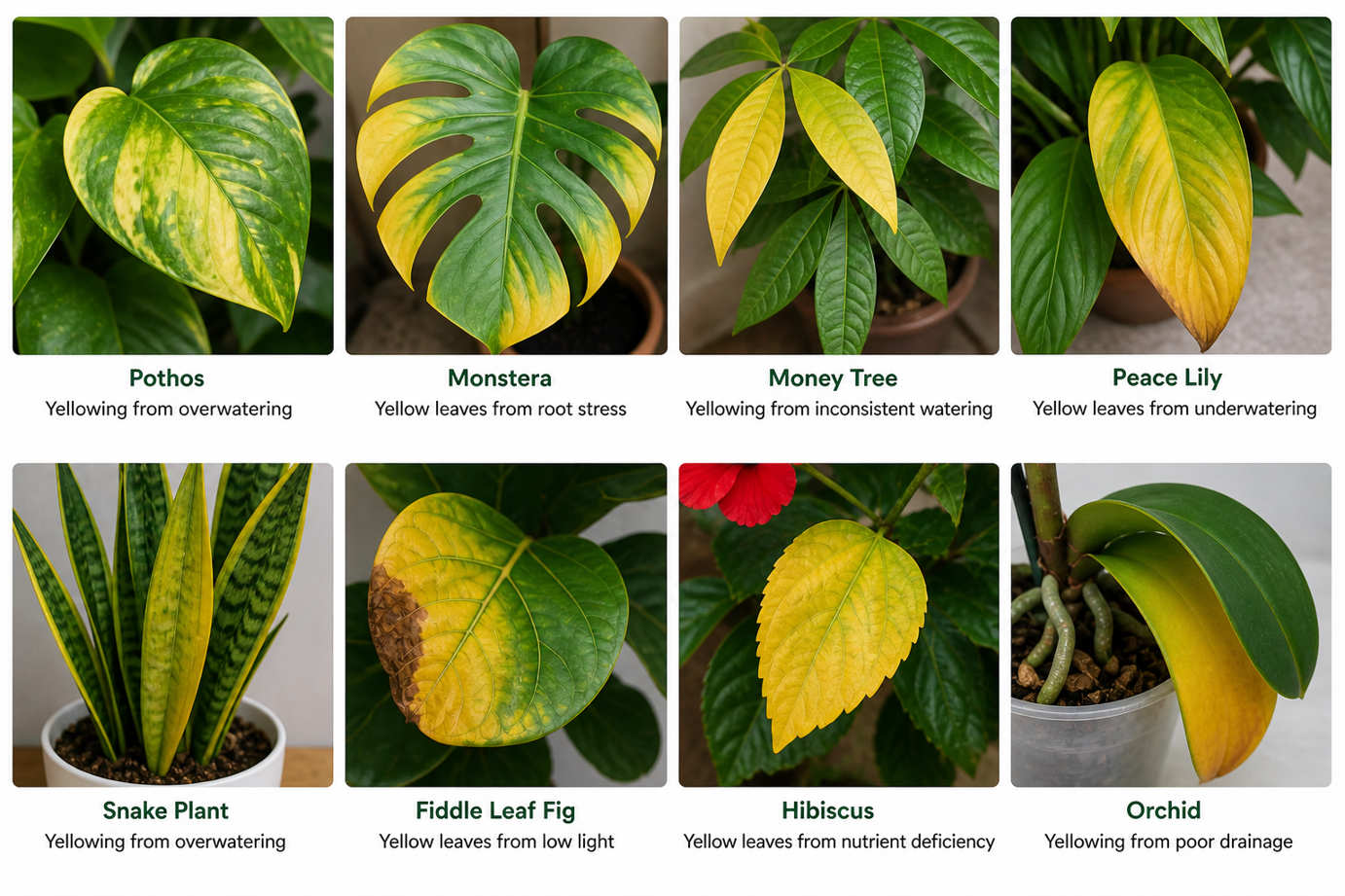
Different plants react differently to stress. Here is how yellowing shows up in common plants people search for:
Plant | Most Common Cause |
|---|---|
Pothos | Overwatering or low light |
Monstera | Overwatering or root stress |
Money Tree | Inconsistent watering |
Orchid | Overwatering or poor drainage |
Peace Lily | Underwatering or low humidity |
If you are dealing with a specific plant, identifying it correctly is the first step. You can use a plant identifier app like Plants Air to confirm the species and diagnose the issue more accurately.
The yellow leaf diagnosis framework
Most plant owners guess. That leads to overcorrection. Instead, use a simple diagnostic approach.
This is a practical framework you can follow:
Check soil moisture first
Observe leaf texture and pattern
Review recent changes in light or location
Consider feeding schedule
This method helps you isolate the cause instead of reacting blindly.
Diagnosis should always come before action.
When yellow leaves are completely normal
Not every yellow leaf is a problem.
Plants naturally shed older leaves to support new growth. This usually happens at the bottom of the plant and occurs slowly.
The difference lies in scale and speed.
If one or two leaves turn yellow over time, it is normal. If multiple leaves change color quickly, it signals stress.
Pattern and speed matter more than the color itself.
Understanding this prevents unnecessary changes that may harm a healthy plant.
How to fix yellow leaves the right way
Fixing plant leaves turning yellow depends entirely on identifying the correct cause.
Here is a structured way to approach it:
First, adjust watering based on soil condition.
Second, optimize light exposure gradually.
Third, check if nutrients are missing or excessive.
Fourth, monitor changes over a few days before adjusting again.
Avoid making multiple changes at once. That makes it harder to understand what actually worked.
Small, controlled adjustments solve more problems than drastic changes.
If you want to simplify this process, using a tool like the plant identification and diagnosis app helps you move from guesswork to informed decisions faster.
Conclusion
Plant leaves turning yellow is not a mystery once you understand the signals. It usually comes down to watering, light, or nutrients, and each leaves a clear pattern if you look closely.
The key is not reacting quickly, but reacting correctly. When you diagnose the cause first, you can fix the issue early and keep your plant healthy long term.
If you want to identify your plant and understand its health in seconds, exploring a tool like the can make the process much easier.
FAQs
Why are my plant leaves turning yellow and falling off
This usually indicates stress caused by overwatering, underwatering, or sudden environmental changes. Check soil moisture and recent changes in light or location to identify the cause.
Can yellow leaves turn green again
In most cases, yellow leaves do not turn green again. Once chlorophyll is lost, the leaf cannot recover. Focus on new growth instead.
How often should I water my plant to avoid yellow leaves
Watering depends on the plant type, pot size, and environment. Always check soil moisture before watering instead of following a fixed schedule.
Should I cut off yellow leaves
Yes, removing yellow leaves helps the plant redirect energy to healthy growth. Make sure to use clean scissors and cut close to the base.
Can too much sunlight cause yellow leaves
Yes, excessive direct sunlight can bleach leaves and cause yellowing. Gradual light adjustment prevents this issue.