Barcode vs QR Code: What’s the difference and when to use each?
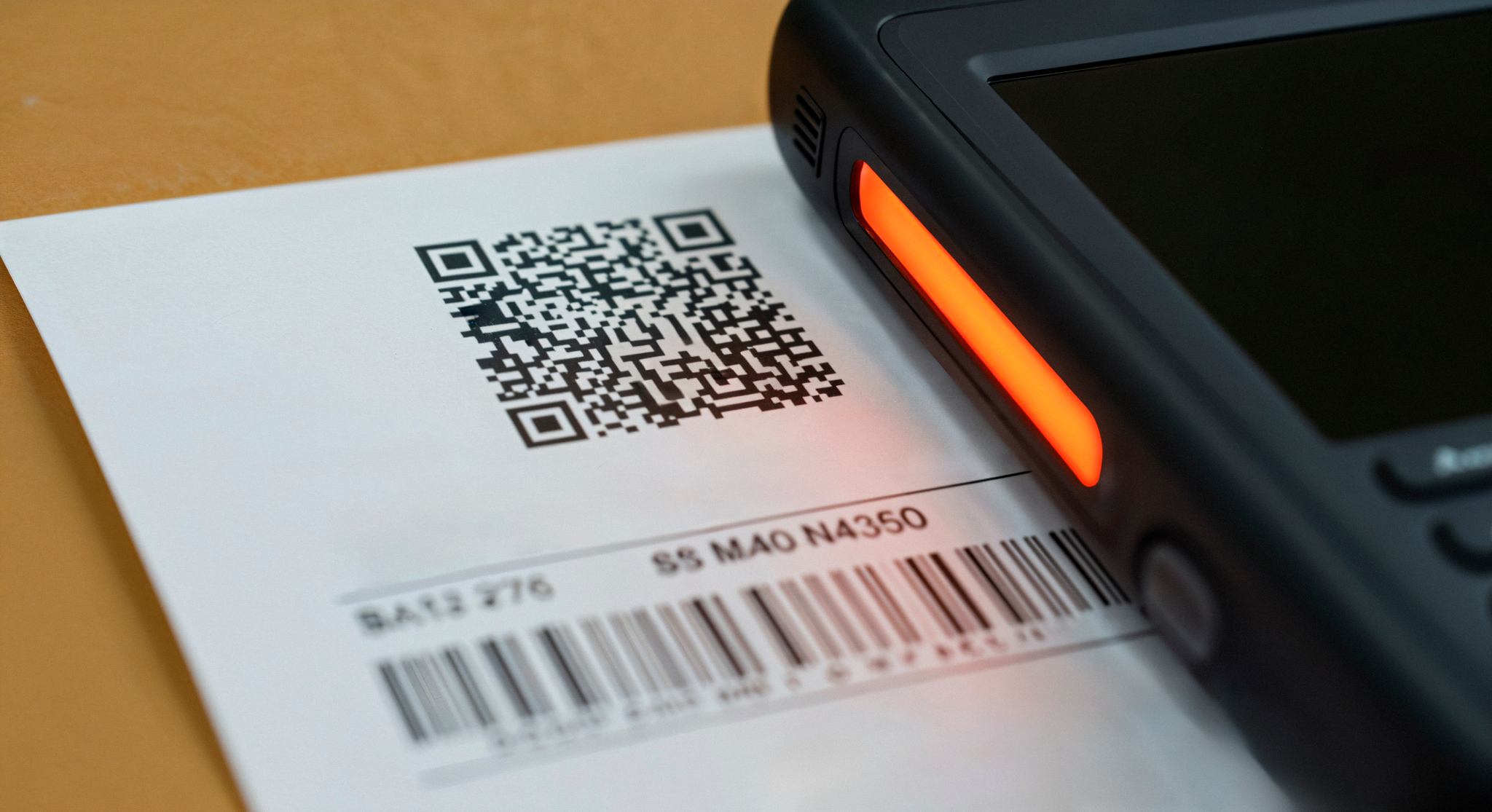
Barcodes and QR codes are everywhere. You see them on product packaging, shipping labels, restaurant menus, event tickets, and even payment screens.
But if you have ever wondered what the real difference is between a barcode and a QR code, you are not alone.
Both are used for scanning and storing information, but they work differently, store different amounts of data, and are used for different purposes. Choosing the right one can save time, reduce errors, and improve customer experience.
In this guide, we will break down barcode vs QR code in simple terms, explain how each one works, and help you understand when to use one over the other.
What Is a Barcode?
A barcode is a machine-readable code made of vertical lines and numbers. It is mainly used to identify products and track items in retail, warehouses, and logistics.
When scanned, a barcode typically returns an ID number that connects to a database. That database contains the actual product information.
That is why barcodes are heavily used for inventory, checkout, shipping, and manufacturing.
If you want a deeper beginner-friendly breakdown, check out our full guide on what a barcode is and how it works.
What Is a QR Code?
A QR code (Quick Response code) is a square shaped code made of small black and white blocks.
Unlike a barcode, a QR code can store much more information directly inside the code itself. It can contain:
Website URLs
Contact information
WiFi passwords
Payment links
App download links
Text messages
Email addresses
Location data
QR codes are designed to be scanned quickly and work well in marketing, digital payments, menus, event check-ins, and smart product packaging.
If you want a detailed explanation with examples, explore our complete guide on what a QR code is, how it works, and its benefits.
Barcode vs QR Code: Key differences
Here is the simplest way to compare them.
Barcode vs QR Code comparison table
Feature | Barcode | QR Code |
|---|---|---|
Shape | Lines (usually horizontal) | Square grid |
Data capacity | Low | High |
Can store links (URLs) | No | Yes |
Scanning direction | Usually one direction | Multi-direction |
Speed | Fast | Very fast |
Damage resistance | Low | Higher (error correction) |
Common use | Retail, inventory, logistics | Marketing, payments, digital access |
Data type | Mostly numeric | Text, URLs, files, data |
This is why barcodes are often used for product tracking, while QR codes are used to connect physical items to digital experiences.
Which stores more information: Barcode or QR Code?
QR codes store far more information than barcodes.
A barcode usually stores a short ID number, like a product code. It is designed to reference a database rather than carry full information.
A QR code can store full data inside the code itself, including text, website links, and login details.
That is why QR codes are popular for marketing campaigns and digital interactions.
Which is easier to scan?
QR codes are generally easier to scan.
Barcodes usually need to be aligned correctly and scanned from a certain direction. If the barcode is bent, scratched, or printed poorly, scanning can fail.
QR codes are more flexible. They can often be scanned even when slightly damaged or printed at a small size. They also scan quickly from almost any angle.
Barcode vs QR Code: Real world use cases
Both barcodes and QR codes are useful. The right choice depends on what you are trying to achieve. Here are the most common use cases.
When to use a Barcode
Barcodes are best when you need fast product identification and inventory tracking.
Common barcode use cases include:
Retail checkout and pricing
Most grocery stores and retail brands use barcodes because they are fast and standardized.
Inventory and warehouse management
Warehouses use barcodes to track product movement, storage location, and stock levels.
Shipping and logistics
Barcodes help track packages, cartons, and pallets across supply chains.
Manufacturing and production
Factories use barcodes for parts identification, batch tracking, and quality control.
Healthcare and pharmacies
Barcodes are used for medicine labeling and patient safety checks.
If you run a business or frequently manage products, scanning barcodes using your phone can save a lot of time. The Air Apps' Barcode Scanner is designed for fast scanning and smooth item tracking.
When to use a QR Code
QR codes are best when you want people to access digital content instantly.
Common QR code use cases include:
Marketing and promotions
QR codes are widely used on posters, packaging, and ads to send people to websites or special offers.
Restaurant menus and digital ordering
Many restaurants use QR codes to display menus, take orders, and collect feedback.
Contact sharing
QR codes can store phone numbers, email addresses, or vCard contact information.
WiFi login
QR codes can instantly connect someone to WiFi without typing a password.
Digital payments
QR payments are used across many countries for fast, contactless transactions.
Event tickets and check-ins
QR codes help manage entry, confirmations, and guest access.
Barcode vs QR Code for business: Which one should you choose?
If you are choosing between barcode and QR code for business use, here is the simplest decision rule.
Choose a barcode if:
You need quick product scanning at checkout
You are managing inventory or logistics
You want compatibility with retail systems
You only need an ID number stored
Choose a QR code if:
You want to link customers to a website
You want to share digital info instantly
You need to store text, contacts, or WiFi access
You want interactive marketing or payment support
In many businesses, the best strategy is using both. Barcodes handle internal tracking, while QR codes handle customer engagement.
Are QR Codes safer than Barcodes?
QR codes are not automatically safer than barcodes. In fact, QR codes can be riskier in certain situations because they can hide URLs and redirect users to malicious websites.
This is why QR code scams have become more common in recent years.
To stay safe when scanning QR codes:
Avoid scanning random QR codes in public places
Preview the URL before opening it
Do not enter personal information unless you trust the source
Use a scanner app that detects suspicious links
Can one app scan both Barcodes and QR Codes?
Yes. Many modern scanner apps can scan both.
If you scan regularly, it is more convenient to use one app for both barcode and QR code scanning instead of switching between multiple tools.
The Air App's QR and Barcode Scanner supports both barcode scanning and QR code reading, making it useful for shopping, inventory tracking, travel, and daily tasks.
Frequently asked questions
Is a QR code a type of barcode?
Yes. A QR code is technically a type of two-dimensional barcode. However, in everyday use, people usually treat barcodes and QR codes as separate categories.
Which is better: QR code or barcode?
Neither is universally better. Barcodes are better for inventory and retail systems. QR codes are better for marketing, payments, and digital access.
Can I scan barcodes and QR codes with my phone?
Yes. Most smartphones can scan QR codes using the camera, but a dedicated scanning app gives better accuracy and extra features
Why do products still use barcodes instead of QR codes?
Barcodes are standardized globally for retail systems and work extremely well for quick checkout and inventory tracking.
Final thoughts
Barcodes and QR codes serve different purposes, and both are important in modern business and daily life.
Barcodes are best for fast product identification and tracking. QR codes are best for sharing digital information, links, and interactive experiences.
If you scan products regularly, manage inventory, or want a fast way to read QR codes and barcodes on your phone, a reliable scanning app makes everything easier.
Try the Air Apps' Barcode Scanner and QR Code Reader for fast, accurate scanning you can trust every day.