Barcode vs NFC: Which is better for payments?
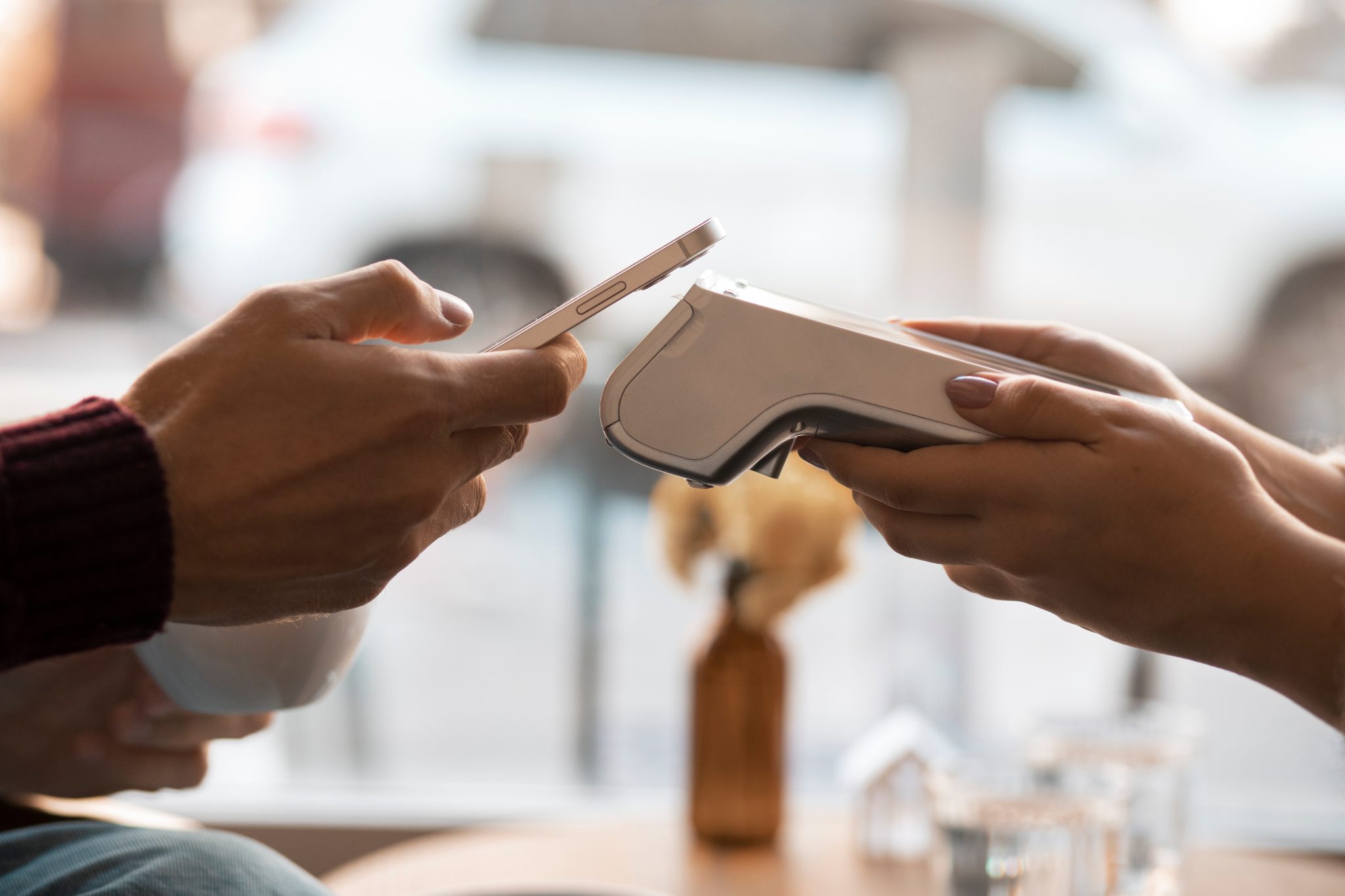
Digital payments have evolved rapidly. From swiping cards to scanning codes and tapping phones, businesses now have multiple technologies to accept payments. Two commonly compared methods are barcode-based payments and NFC payments.
But which one is better?
The answer depends on cost, speed, infrastructure, and customer behavior. In this guide, we break down how barcode and NFC payments work, their pros and cons, and when each is the better choice.
What are Barcode payments?
Barcode payments use a scannable 1D or 2D code to process transactions.vIn most cases today, this refers to QR code payments, which are technically a type of 2D barcode. Here’s how barcode payments typically work:
The merchant displays a QR code
The customer scans it using a banking or wallet app
The app processes the payment
The transaction is confirmed
Because the payment data is stored inside the code or linked to a payment gateway, no physical card reader is required. Understanding the difference between barcodes and QR codes helps clarify why QR codes are the dominant barcode format used for digital payments.
What is NFC in payments?
NFC stands for Near Field Communication. It allows two devices to communicate wirelessly when placed close together, usually within a few centimeters. NFC is the technology behind:
Apple Pay
Google Pay
Contactless debit and credit cards
Tap-to-pay terminals
Here’s how NFC payments work:
The merchant uses an NFC-enabled payment terminal
The customer taps their phone or card
The terminal reads encrypted payment data
The transaction is processed instantly
NFC does not require scanning. It relies on proximity-based wireless communication.
Barcode vs NFC: Key differences
Here’s a direct comparison.
Hardware requirements
Barcode payments:
Require only a printed or digital QR code
No mandatory POS hardware
NFC payments:
Require NFC-enabled payment terminals
Hardware installation and maintenance costs
If minimizing equipment cost is a priority, barcode-based payments are often more accessible.
Setup cost
Barcode payments:
Low cost
Easy to generate and deploy
Ideal for small businesses
NFC payments:
Higher upfront cost
Requires certified hardware
Small vendors and startups often prefer QR-based systems because of lower barriers to entry.
Transaction speed
NFC:
Very fast
Nearly instant tap confirmation
Barcode:
Slightly slower
Requires scanning and confirmation
For high-volume checkout environments, NFC may feel smoother.
User convenience
NFC:
Tap and go
Minimal interaction
Barcode:
Open app
Scan
Confirm
However, in regions where QR payments are common, users are comfortable with scanning workflows.
Security
NFC:
Encrypted
Tokenized payment data
Short-range communication reduces interception risk
Barcode:
Secure when linked to encrypted payment gateways
Vulnerable if fake QR codes are placed over legitimate ones
Businesses must monitor for QR code tampering and educate customers about verifying payment links.
Internet dependency
Barcode payments:
Usually require internet connectivity for processing
NFC payments:
Can sometimes complete limited offline transactions depending on the system
This makes NFC slightly more flexible in low-connectivity environments.
Which is better for small businesses?
For small businesses, food trucks, freelancers, and pop-up vendors, barcode payments are often the better option because:
No expensive hardware required
Easy to print and display
Low setup barrier
Quick implementation
QR codes allow businesses to accept payments without investing in a full POS system.
Which is better for retail stores?
Established retail stores may prefer NFC because:
Faster checkout flow
Integrated POS systems
Higher transaction volume
Customer familiarity with tap-to-pay
Large retailers often support both systems to maximize convenience.
Can businesses use both?
Yes. Many businesses combine NFC and QR payments. For example:
Retail stores offer tap-to-pay and QR options
Restaurants allow QR payments at tables
Events use QR tickets but NFC for merchandise
Using multiple payment technologies increases flexibility and customer satisfaction.
When barcode payments make more sense
Barcode or QR-based payments are ideal when:
Hardware budgets are limited
You operate in markets where QR payments are dominant
You need easy deployment across multiple locations
You want to integrate payment with marketing campaigns
QR codes can also link customers to loyalty programs, feedback forms, and promotional pages, combining payment with engagement.
When NFC is the better choice
NFC is stronger when:
Speed is critical
POS integration is required
Customers expect tap-to-pay
High transaction throughput is needed
In fast-moving retail environments, shaving seconds off each transaction matters.
The future of payment technology
Both barcode and NFC technologies will continue evolving. Trends to watch include:
Biometric authentication
Cross-border wallet interoperability
QR-based subscription payments
NFC-enabled wearable devices
Integrated loyalty systems
Rather than one replacing the other, both technologies will likely coexist.
Final verdict: Barcode vs NFC for payments
There is no universal winner. Barcode payments are cost-effective, accessible, and easy to deploy. NFC payments are fast, seamless, and widely trusted in developed retail environments.
The better option depends on your business model, budget, customer behavior, and infrastructure. For many businesses, offering both provides the best customer experience.