Best ways to check your Math Homework before submitting
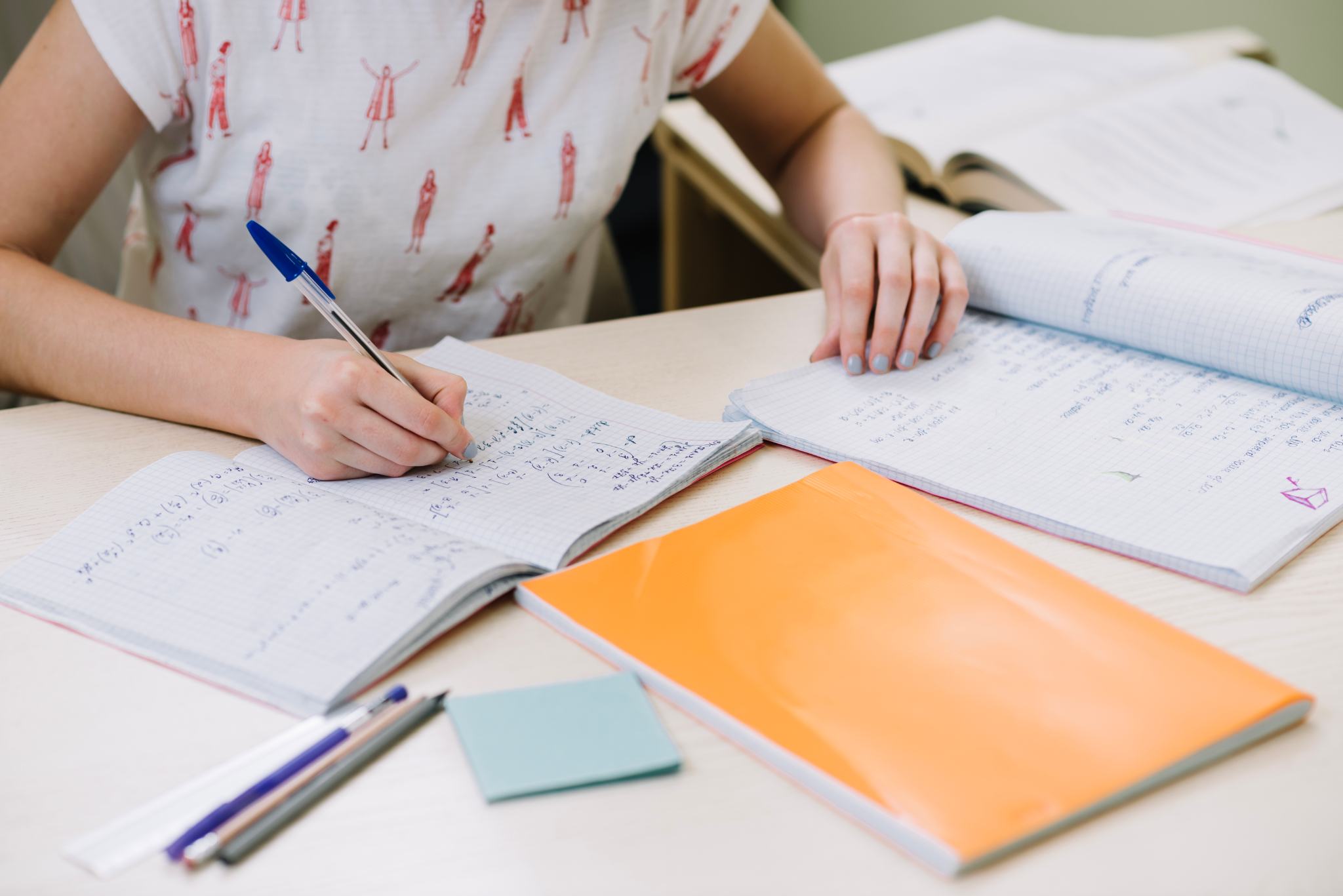
Finishing math homework does not always mean it is correct. Small calculation errors, missed signs, or skipped steps can turn a correct method into a wrong answer. That is why checking your math homework before submitting it is just as important as solving the problem itself.
Whether you are a student, a parent helping at home, or someone returning to math after a break, using the right checking methods can help you catch mistakes early and feel confident about your answers.
Why checking math homework matters.
Math builds on logic. One incorrect step can affect everything that follows. Checking your work helps you:
Spot calculation errors
Catch sign mistakes and missing steps
Improve accuracy over time
Understand where you usually go wrong
Avoid losing marks for small issues
Students who regularly review their homework tend to improve faster because they learn from mistakes instead of repeating them.
Common mistakes students miss when checking homework.
Before looking at tools, it helps to know what usually goes wrong. Some of the most common issues include:
Forgetting negative signs
Skipping parentheses
Mixing formulas
Rounding numbers too early
Copying numbers incorrectly
Solving the right problem with the wrong method
Knowing these patterns makes checking easier.
10 best ways to check your math homework.
Here are practical, effective ways to verify math homework before submission.
Redo the problem using a different method
If possible, try solving the same problem in another way. If both methods lead to the same result, your answer is likely correct.
This works especially well for algebra and arithmetic problems.
Work backwards from your answer
Start with your final answer and reverse the steps to see if you arrive at the original problem.
This is a powerful way to confirm equations and word problems.
Substitute your answer back into the equation
For algebra problems, plug your solution back into the original equation. If both sides match, the answer is correct.
This simple step catches many errors.
Check units and signs carefully
Make sure:
Units make sense
Positive and negative signs are correct
Decimal points are in the right place
Many mistakes happen here, not in the main calculation.
Estimate to see if the answer makes sense
Even a rough estimate can tell you if an answer is reasonable.
For example, if the answer is 2,500 but you expected something close to 25, something went wrong.
Review each step, not just the final answer
Do not jump straight to the result. Look at each step and confirm that it follows from the previous one.
This is especially important for multi-step problems.
If you want to strengthen this habit, it helps to follow a clear step-by-step math solving approach.
Use a calculator to verify calculations
A calculator can quickly confirm arithmetic, fractions, and percentages.
However, calculators do not explain mistakes, so they should be used as a checking tool, not a replacement for understanding.
Scan the problem to compare solutions
For long or handwritten problems, scanning the equation can save time and reduce input errors.
A photo math solver can help you compare your solution against a structured breakdown.
Compare with a step-by-step explanation
Seeing a complete solution helps you identify where your work differs.
An AI math solver that explains each step can highlight mistakes you might not notice on your own.
Take a short break and recheck
Stepping away for even five minutes can help you spot errors more easily when you return.
Fresh eyes catch mistakes faster.
How to check different types of math homework.
Not all math homework should be checked the same way.
Checking algebra homework
Substitute answers back into equations
Verify signs and distribution
Confirm variable isolation steps
If you are working on algebra regularly, learning how AI supports algebra checking can be helpful.
Checking fractions and percentages
Simplify fractions fully
Convert percentages to decimals when needed
Double-check division and multiplication
Checking word problems
Re-read the question
Make sure your answer matches what is being asked
Check units and context
Word problems often fail due to misinterpretation, not math errors.
Using tools responsibly to check homework.
Homework checking tools should support learning, not replace it. The best approach is:
Solve the problem yourself
Check your steps
Use a tool to confirm accuracy
Review any differences
A math homework helper that combines scanning, AI explanations, and calculator tools can make this process faster and more reliable.
How parents can help students check math homework.
Parents do not need to know advanced math to help. They can:
Ask the student to explain their steps
Encourage checking, not rushing
Use step-by-step tools together
Focus on understanding, not just grades
This builds confidence and reduces homework stress.
Final checklist before submitting math homework.
Before turning in your work, ask yourself:
Did I answer every question?
Do my steps follow logical order?
Did I check signs, units, and decimals?
Does the answer make sense?
Did I verify at least one problem using another method?
If the answer is yes, your homework is likely ready.
Final thoughts
Checking math homework is not about perfection. It is about accuracy, learning, and confidence. Students who review their work consistently improve faster and make fewer mistakes over time.
Using a combination of careful review, estimation, and supportive tools like an AI Calculator can turn homework checking into a learning habit instead of a stressful task.